Emergency room services and hospitals are closely connected, yet they play distinct roles within the healthcare system. Understanding these differences can help patients choose the right level of care when needed.
Function and Purpose
Emergency Room (ER):
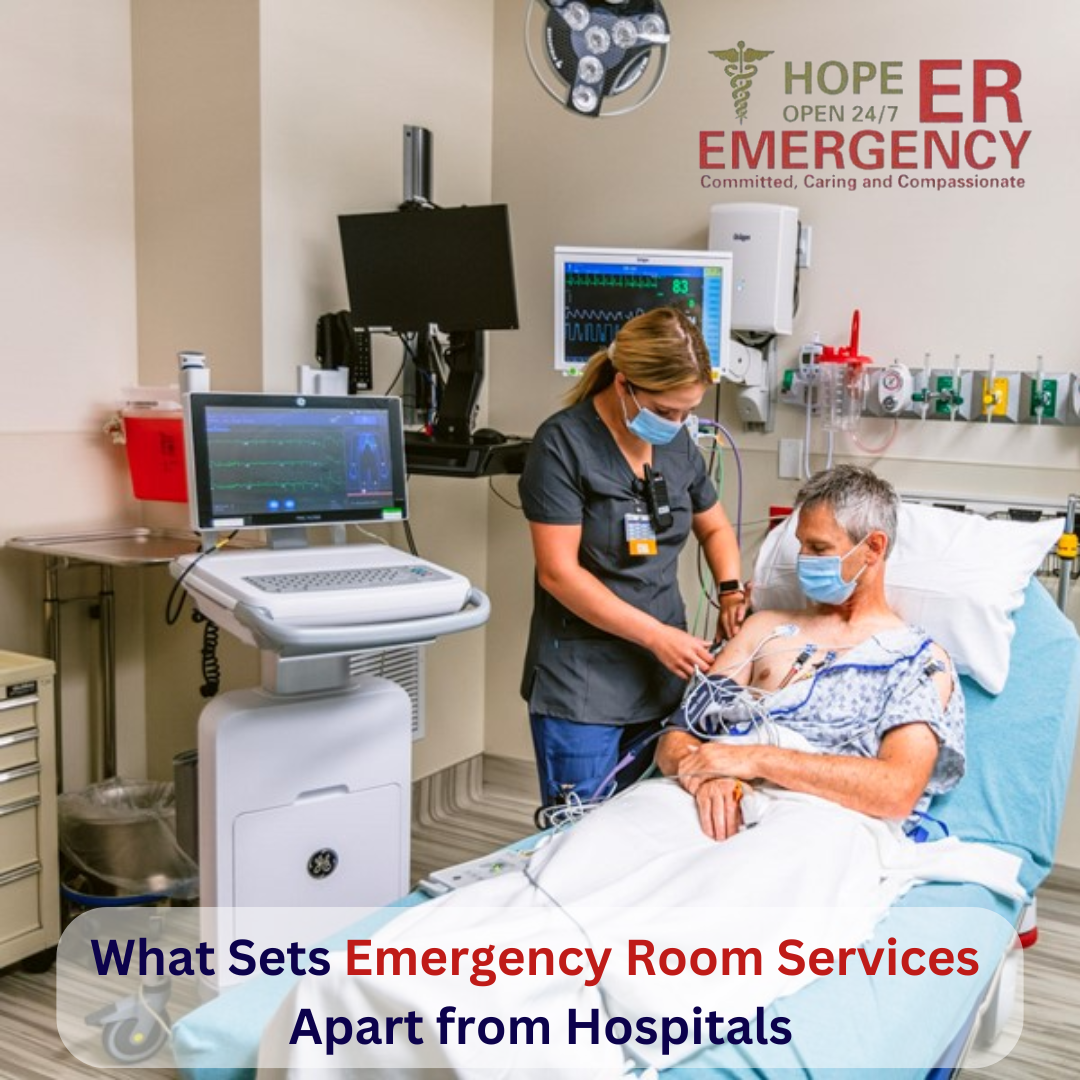
An emergency room, also known as an emergency department (ED), is a dedicated unit designed to deliver immediate medical care for urgent and life-threatening conditions. This includes severe injuries, sudden illnesses, trauma, or any situation requiring rapid medical attention.
Hospitals:
Hospitals provide comprehensive healthcare services that go beyond emergency treatment. While they include emergency care, their primary focus is on ongoing medical treatment, surgeries, diagnostics, inpatient care, and recovery. Hospitals house multiple departments such as operating rooms, labor and delivery units, intensive care units (ICUs), and medical and surgical wards.
Scope of Services
ER:
Emergency rooms specialize in quickly assessing, stabilizing, and treating critical patients. Once stabilized, patients may either be discharged or admitted to a hospital for continued care based on their condition.
Hospitals:
Hospitals offer a wide range of services, including planned and elective procedures, advanced diagnostics, long-term treatment, rehabilitation, and follow-up care. They are equipped to manage extended patient stays and specialized medical needs.
Staffing
ER:
Emergency rooms are staffed by trained emergency physicians, nurses, and support staff who are experienced in managing high-pressure and time-sensitive medical situations.
Hospitals:
Hospitals employ a broad team of healthcare professionals, including primary care physicians, specialists, surgeons, nurses, and allied health staff, all working together to provide comprehensive and continuous care.
Hours of Operation
ER:
Emergency rooms operate 24/7, ensuring immediate care is available at any time, day or night.
Hospitals:
Hospitals also operate around the clock; however, different departments and services may function on varying schedules beyond emergency care.
Location
ER:
The emergency room is a specific section within or associated with a hospital, typically located near the main entrance for quick and easy access.
Hospitals:
Hospitals are large healthcare facilities with multiple departments, often spread across one or more buildings within a medical campus.
Summary
Emergency rooms are an essential part of the healthcare system, focusing on rapid response to medical emergencies. Hospitals, on the other hand, provide a broader spectrum of medical services, including both inpatient and outpatient care, addressing a wide range of health conditions beyond emergencies.
Hope ER is a freestanding emergency room that meets stringent Texas State requirements applicable to hospitals. Hope ER offers observation admissions for up to 23 hours and maintains transfer agreements with local hospitals to ensure seamless patient care when advanced treatment is required. Whether it’s an accident, sudden trauma with bleeding injuries, or a chronic condition requiring immediate attention, Hope ER is prepared to help.
For emergency medical services in Lufkin, visit Hope ER at 2111 East Denman Avenue, Lufkin, TX 75901, or call 936-899-7243. Learn more at www.hopeer911.com.